Your sensitivity isn't the same every day
Let's be real: your clitoris doesn't feel the same on day 5 of your cycle as it does on day 14. During ovulation, estrogen peaks, blood flow increases, and your clitoris literally engorges slightly. That's not in your head. It's measurable physiology. Which means your lemon vibrator technique needs to shift with it.
Most people treat their pleasure like a fixed equation. Same vibrator. Same settings. Same pressure, every single time. But your body is constantly changing, especially during the follicular and ovulatory phases when sensitivity ramps up. Learning to read those shifts and adjust your approach is the difference between "this feels okay" and "this feels incredible."
What actually happens to your clitoris during ovulation
About five to seven days before you ovulate, estrogen starts climbing. Your clitoris responds immediately. The tissue swells slightly, nerve endings become more responsive, and the whole area becomes hypersensitive. For many people, this is when desire peaks too. You're more likely to initiate sex, to want to explore, to reach orgasm faster and more intensely.
But here's the catch: what felt perfect during menstruation might feel too intense now. A vibrator setting you breezed through last week might suddenly feel overwhelming. Your body isn't changing because something's wrong. It's changing because your hormones are doing exactly what they're supposed to do.
Then, after ovulation, progesterone rises and sensitivity drops again. You'll move into the luteal phase, where you might need more intensity, longer warm-up time, and a completely different approach. That's normal. That's also why having a device like the lemon vibrator with multiple settings is so useful. You can match your tool to your body's actual needs, not the other way around.
How ovulation changes your pleasure timeline
Three shifts happen simultaneously during ovulation, and they all affect how you use a lemon clitoral vibrator:
Faster arousal. You might go from "not interested" to "ready to go" in five minutes instead of fifteen. This is the hormone cocktail of estrogen and testosterone peaking at the same time.
Lower orgasm threshold. Your body needs less stimulation to reach climax. What took three minutes on day 8 might take ninety seconds on day 14. This catches people off guard. They use the same intensity and suddenly orgasm happens before they expected it, or they're left chasing a sensation that feels elusive.
Different sensation mapping. During ovulation, some people find direct clitoral stimulation almost too much and prefer indirect contact or a gentler approach. Others want maximum intensity. The variation is wild, and it's not random. It's tied to how swollen and sensitive the tissue is that particular cycle.
Adjusting your lemon vibrator technique for the ovulatory window
Here's what I recommend to clients when ovulation arrives:
Start one or two settings lower than usual. If you normally use pattern 3 on your lemon vibrator, begin at pattern 1 or 2. You can always increase intensity. You can't un-feel overstimulation, so start conservative and work up. Your clitoris will tell you if it wants more.
Increase foreplay and warm-up time, but keep it shorter overall. This sounds contradictory, but it's not. You might need more mental prep (longer kissing, touching, anticipation), but your body will be ready faster than other times in your cycle. Spend more time building arousal mentally, less time building it physically.
Try indirect stimulation first. During ovulation, some people find that stimulating the area around the clitoris, or using the vibrator over your underwear, feels better than direct contact. The lemon vibrator's suction design works beautifully here because it creates that broader, gentler pressure rather than direct vibration.
Pay attention to positioning. Ovulation changes blood flow, which changes which positions feel best. You might find that lying on your back feels too intense, but angled pressure from the side feels perfect. Or vice versa. Experiment. Your body is telling you something useful.
Use lubrication even if you feel naturally wet. During ovulation, you'll produce more cervical fluid (which is why it's often used for fertility tracking). That doesn't mean your vulva needs additional lube for a vibrator, but adding it anyway can reduce friction and make sensation feel more blended and less sharp. Water-based lubrication softens the intensity without dampening sensation.
Tracking your cycle helps you predict the shifts
You don't have to guess. If you're not already tracking your cycle, starting now gives you a map of when sensitivity increases. Apps, a calendar, whatever works. The goal isn't obsession. It's information.
Once you have two to three months of data, patterns emerge. You'll see that ovulation happens roughly the same window each month (usually 14 days before your next period, but it varies). You'll notice that your sensitivity ramps up about five to seven days before ovulation. You'll recognize the week after ovulation when progesterone rises and your body wants something completely different.
Then you can plan. If you know ovulation is coming, you know to charge your lemon vibrator, clear your schedule, and adjust your expectations about what intensity will feel good. You're not guessing anymore. You're working with your body's actual cycle, not against it.
Why sensitivity shifts matter beyond just pleasure
Honestly though, this isn't only about having better orgasms during ovulation. Learning to read your cycle teaches you to listen to your body in every other context too. If you notice you have more energy during the follicular phase, you might schedule workouts then. If you know the luteal phase is when you need more alone time and gentleness, you can set boundaries.
Your partner benefits from this knowledge too. When they understand that your desire, energy, and sensitivity change throughout your cycle, they stop taking it personally. "You didn't want me last week but you do now" becomes "Your cycle shifted, and that's beautiful" instead of something that feels like rejection or unreliability.
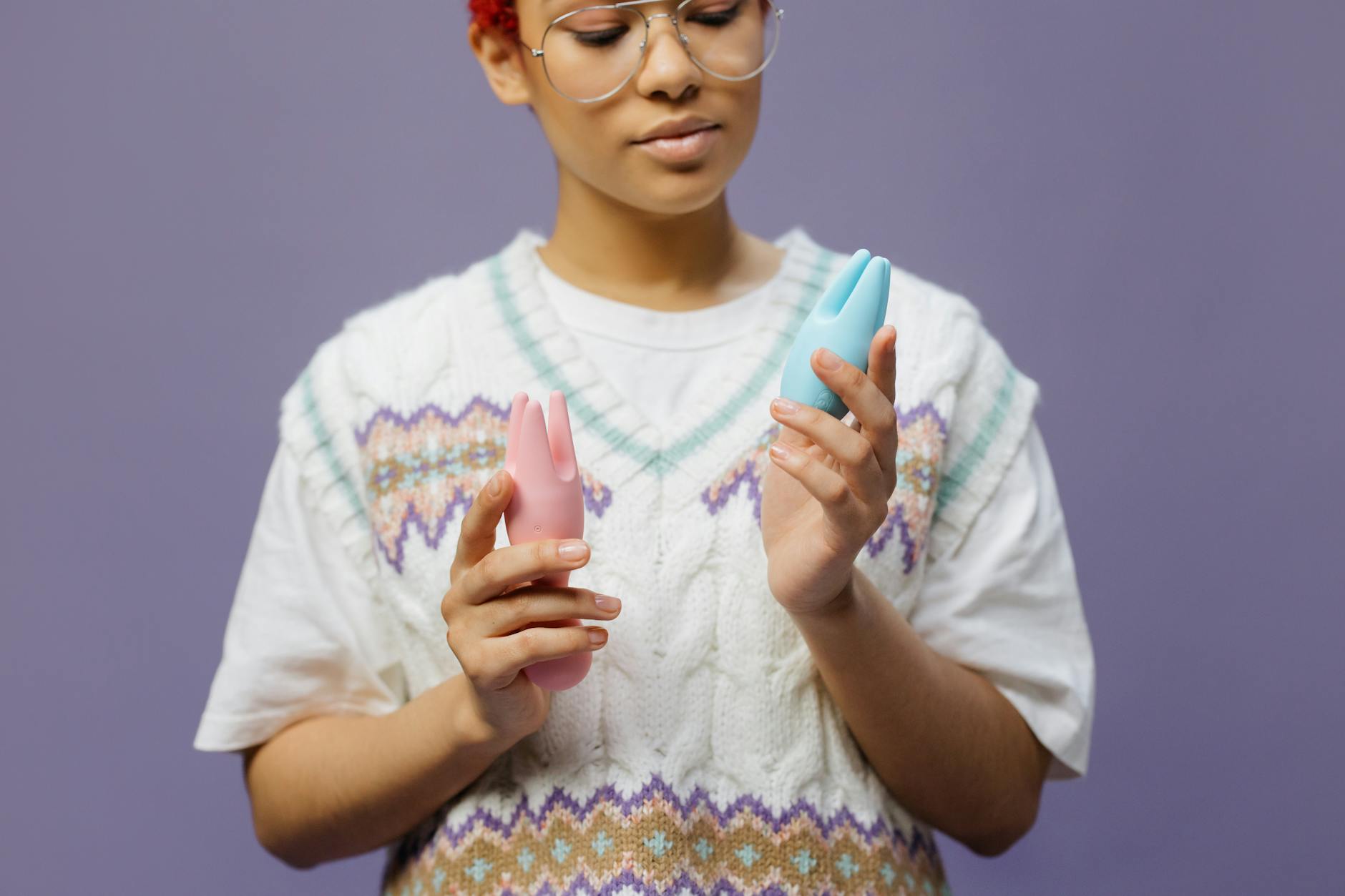
Photo by cottonbro studio on Pexels
When increased sensitivity becomes pain or discomfort
There's a difference between "more sensitive" and "painful." If ovulation typically brings sharp pain, stabbing sensations, or anything that makes you want to stop immediately, that's worth investigating. Some people experience mittelschmerz (ovulation pain), which is a real medical thing. Others have undiagnosed endometriosis or other conditions that cause ovulatory pain.
That's not something to power through with a vibrator. A conversation with your GP or gynecologist makes sense first. Once you've ruled out structural issues, then you can figure out technique adjustments or whether a gentler clitoral vibrator approach helps.
If you're already working with a pelvic floor specialist or therapist, bring this up. They can help you distinguish between normal sensitivity increases and pain patterns that need attention.
The simplest adjustment to start with
If you change nothing else, change this: spend the week leading up to ovulation testing your lemon vibrator one or two settings lower than your baseline. That's it. Notice how sensation feels different. Notice if you reach orgasm faster. Notice what your body actually wants instead of what you think it should want.
Your cycle is information. Your vibrator is a tool for reading that information more clearly. The two together make your pleasure more intentional, more responsive, and honestly, more satisfying.
Frequently asked questions
Can ovulation make vibrator use feel uncomfortable or painful?
Yes, for some people. If ovulation typically brings discomfort with your lemon vibrator that doesn't happen other times in your cycle, it's worth tracking. Is the pain sharp or dull? Is it localized or diffuse? Does it happen with certain intensities or positions? Once you have that information, a conversation with your doctor helps. Some people find that progesterone cream or certain stretches help. Others discover they need a different approach entirely during ovulation. The key is not assuming this is normal and powering through.
Does the lemon vibrator work better during ovulation than other times?
Not necessarily better, just differently. The lemon vibrator's suction design means you can go gentler during ovulation and still feel plenty, which is an advantage when sensitivity is already high. During the luteal phase, you might want more direct intensity. Both work. What changes is what your body needs, not the vibrator itself.
Should I stop using my vibrator during ovulation if I'm trying to conceive?
The short answer is no, but check with your fertility specialist if you're working with one. Vibrator use doesn't affect ovulation or sperm survival. That said, if you're timing intercourse around ovulation, you might find that your increased arousal during this window makes sex feel better anyway. If you're using a vibrator solo, orgasm doesn't interfere with conception. Some research even suggests that orgasm might help with sperm retention, though that's not the reason to use one.
How do I know when my ovulation window is if my cycle is irregular?
Tracking for several months helps, even with an irregular cycle. You'll often notice patterns even if the timing varies. Ovulation predictor kits (the ones you pee on) can help pinpoint your window if you want precision. Basal body temperature tracking works too, though it requires consistency. An app that tracks multiple factors (flow, symptoms, desire, mood) often gives better predictions than a calendar-only approach. Your doctor can also help if irregularity is significant.
Can I use my lemon vibrator during ovulation if I have a menstrual cup in?
Generally yes, but depends on placement. If you're using a cup that sits lower in the vaginal canal, internal vibration might make the seal uncomfortable. External clitoral vibration with your lemon clitoral vibrator works fine. If you want internal and external combined during ovulation, you might remove the cup first, or wait until you're ready to switch to a different stimulation style. Honestly, ovulation's when you have the most flexibility and desire anyway, so it's a good time to experiment with what feels best.
Why does my clitoris feel less sensitive after ovulation when I'm usually more sexually interested?
Progesterone rises after ovulation, which actually dampens clitoral sensitivity even as desire sometimes stays high or even increases. Progesterone does different things to different people. Some feel calmer and more sensual. Others feel less responsive and need more intensity. It's not a contradiction. You can want sex more while your body needs a different kind of stimulation to feel satisfied. This is where understanding your physical sensitivity throughout your entire cycle helps you adjust expectations and technique.
Is increased sensitivity during ovulation the same for everyone?
No. Some people experience it dramatically. Others barely notice a shift. Hormonal contraception, medical conditions, stress levels, and individual neurochemistry all play a role. If you're not seeing clear sensitivity changes, that doesn't mean something's wrong. You might have a naturally consistent response throughout your cycle. Or the shifts might be subtle enough that you need two to three months of careful attention to spot them. If you're concerned, your doctor can help rule out hormonal imbalances.
Your cycle is an asset, not an obstacle
Most sexual wellness advice treats your body like it should be the same every single day. It shouldn't be. It's not meant to be. The fact that your sensitivity, desire, and pleasure capacity shift throughout your cycle is a feature, not a bug. It's an invitation to pay attention. To adjust. To work with your biology instead of fighting it.
Your lemon vibrator is most useful when you're using it in conversation with your body's actual state, not despite it. That's when pleasure becomes not just intense, but intelligent.