Let's start with permission
Postpartum bodies are not broken. They're rebuilt. And that rebuild takes time, attention, and patience that most people don't talk about frankly enough. If you're thinking about returning to sex or solo pleasure after birth, the first thing you need is permission to move slowly, change your mind, and trust your own signals over anyone else's timeline.
Your pelvic floor has been through significant stress, whether you had a vaginal delivery or a cesarean. The tissues are healing, hormones are shifting, and if you're breastfeeding, your estrogen is still suppressed. This changes sensation, lubrication, and arousal in real, measurable ways. None of this is permanent. All of it is normal.
Why standard vibrators can feel wrong postpartum
Most vibrators rely on direct friction against tissue. That works beautifully for most bodies most of the time. Postpartum, sensitive tissue and hormonal shifts mean that direct pressure can feel too intense, sometimes uncomfortable, occasionally painful. You're not being dramatic. Your nervous system is accurately reporting what your tissue needs.
This is where suction works differently. Instead of vibrating against tender skin, suction stimulates the thousands of nerve endings in the clitoris by drawing tissue gently into a chamber and pulsing. No friction. No pressure. Just rhythmic stimulation that feels gentler while often producing stronger sensation. For postpartum bodies, this distinction is everything.
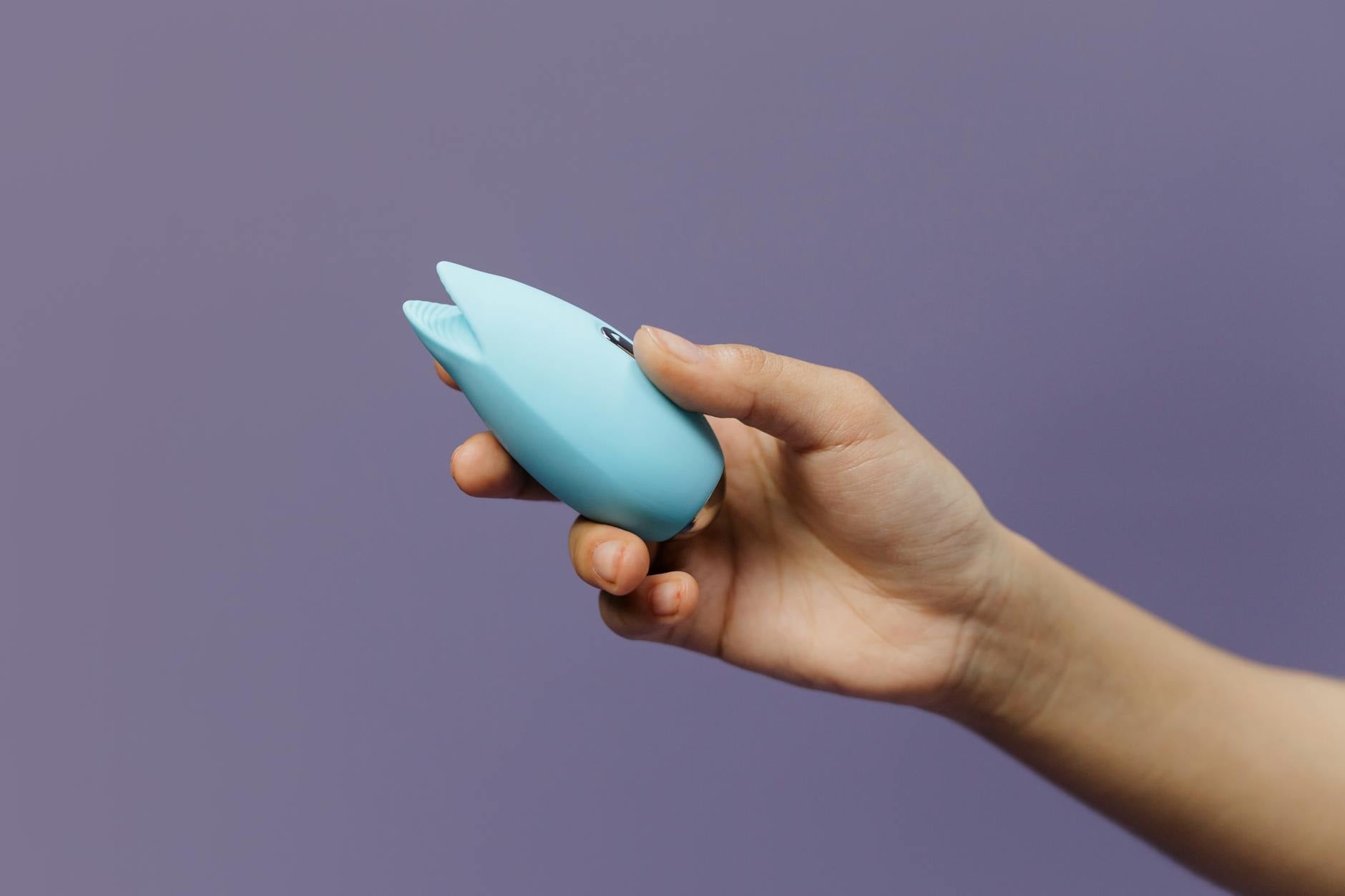
A lemon clitoral vibrator is designed around this principle. The Lem's suction technology means you get powerful stimulation without the mechanical friction that can feel abrasive on healing or sensitive tissue.
The timeline: when to start
Honestly though, there's no universal "six weeks" rule that applies to every body. Your OB or midwife will likely clear you for penetrative sex around that mark. But returning to pleasure and returning to partnered sex are not the same thing.
For solo exploration with a lemon vibrator, most people can start gently around eight to ten weeks postpartum, assuming there are no complications and bleeding has stopped. Start even later if you had a tear, stitches, or a cesarean. Your body will tell you when it's ready. Listen to that signal, not a calendar.
If penetration feels tender or impossible, that's your clue to stay external. A lemon clitoral vibrator works beautifully on external tissue only. You don't need penetration for profound pleasure.
How to ease back in safely
Start with the lowest setting. On most lemon vibrators, this is pattern one or two. You're not testing your courage. You're gathering information about what your body can handle and what it actually wants. There's no achievement for jumping to setting seven.
Use plenty of water-based lubricant. Postpartum hormonal changes mean less natural lubrication, even if you're not breastfeeding. Lube isn't a sign that something's wrong. It's a tool that makes sensation better and reduces friction entirely. Apply it generously.
Spend time on arousal first. Your nervous system needs time to shift into pleasure mode, especially if you've been in survival mode for months. This isn't wasted time. This is the foundation. Spend ten to twenty minutes on arousal before you introduce the lemon vibrator. Think about what turns you on. Notice your own breath and body. Let yourself feel curious instead of goal-oriented.
When you introduce the vibrator, start with short intervals. Two minutes on, pause, assess how you're feeling. Three minutes on, pause. You're building a map of what feels good, not chasing an orgasm. Orgasms are a bonus. Sensation and pleasure are the point.
The emotional piece nobody mentions
Postpartum sexual desire often vanishes, and then it hangs out in that disappeared state for months. This isn't unusual. It's not a sign you've lost attraction or that something's wrong with your body. Hormonal shifts, sleep deprivation, and the massive cognitive load of early parenting all suppress desire. Add in the fact that your body has been touched constantly by an infant or partner, and you might legitimately need space before wanting touch for pleasure.
If you're partnered, this matters more than the mechanics. Your partner needs to understand that your relationship to touch is temporarily shifted. It's not rejection of them. It's your system genuinely asking for time. A lemon vibrator gives you a way to reconnect with your own pleasure without the pressure of performing for someone else or managing their expectations.
Solo exploration with a clitoral vibrator can actually be the bridge that brings desire back. It reminds you that pleasure still belongs to you.
Watch for signs you need to pause
Pain during or after is never something to push through. Sharp pain, burning, throbbing afterward that doesn't resolve in a few minutes. These are signals to stop and give yourself more time. Talk to your provider if it persists.
If you notice increased bleeding or discharge, pause. Your body is telling you it's not ready yet. That's information, not failure.
If everything feels numb, that's more common than you'd expect with postpartum hormonal shifts and sleep deprivation. This usually resolves with time. Keep using the vibrator gently. Sensation often returns, sometimes in waves.
Reintroducing partnered sex
When you're thinking about returning to partnered sex, start without penetration. Use a lemon vibrator together as foreplay. This lets your partner see what brings you pleasure now. It takes pressure off your body to perform. And it reminds both of you that your pleasure is worth the time.
Communicate what you need. "I need more time before penetration" is a complete sentence. "I want this kind of touch but not that kind" is data your partner needs. Most good partners want to know what actually feels good. You're not being difficult by being specific.
The return of desire
Desire usually comes back, though sometimes it looks different than it did before. You might find that you need more foreplay. You might need more emotional connection first. You might need to feel less touched by the time evening comes. All of these are normal postpartum adjustments. None of them are permanent or signs of a broken system.
Using a lemon vibrator during this period can accelerate that reconnection with desire because you're building evidence that pleasure is accessible to you, even when everything else feels chaotic. That's powerful.
Frequently asked questions
Can I use a lemon vibrator before I'm cleared by my provider?
If you're using it on external tissue only and you're not experiencing pain or complications, gentle external stimulation around eight to ten weeks is usually fine. Ask your provider specifically. "Is external clitoral stimulation okay?" is a clearer question than "When can I have sex?"
What if penetration still hurts months later?
Talk to a pelvic floor physical therapist. Postpartum pain during sex is common, and it's often treatable. A PT trained in postpartum recovery can identify tension, scar tissue, or other factors and help resolve them. This is not something you have to live with indefinitely.
Is it normal to feel nothing when using a lemon vibrator postpartum?
Completely normal, especially if you're breastfeeding or severely sleep-deprived. Your nervous system is dysregulated. Keep trying gently. Sensation usually returns. If it doesn't after three to four months, mention it to your provider.
Can my partner use a lemon vibrator on me if I'm too tired to do it myself?
Yes, absolutely. This is actually a beautiful way to rebuild intimacy without requiring you to initiate or be the active partner. Communication is key. Tell them the setting that feels good, the pace, where you want stimulation. Let them enjoy bringing you pleasure.
What if I have stitches or tearing?
Wait longer. Suction vibrators are gentler than most, but you still want full tissue healing before introducing any vibration. Ask your provider when you're fully healed. Usually this means four to six weeks longer than a straightforward delivery.
How do I know if I'm pushing myself too fast?
If you're thinking about it obsessively or feeling pressure from a partner to resume pleasure, you're probably going too fast. If your body is telling you to pause and you keep going anyway, you're pushing. Pleasure should feel like permission, not obligation. If it feels like obligation, take more time.
You're not behind
Postpartum recovery isn't a race. Your body didn't break. It transformed. The return to pleasure is part of reclaiming that body as your own again, separate from the vessel-for-someone-else role that pregnancy and early parenthood require. A lemon clitoral vibrator is a tool that respects the sensitivity of postpartum tissue while delivering profound sensation. Use it at your own pace. Trust your body. And know that desire and pleasure are waiting for you on the other side of this recovery period. If you have specific questions about your own recovery or rebuilding intimacy with a partner, reach out to us at /contact.