Let's name what's actually happening
You can orgasm alone. You struggle with it partnered. Or maybe the opposite. Your body lights up with a lemon vibrator in your hand but feels numb when your partner touches you. This isn't a failure. It's a signal that pleasure and partnership are running on different neural and emotional circuits right now.
Here's what's important to know: that disconnect is fixable. It usually isn't about your body, your partner, or the relationship itself. It's about how your nervous system has learned to respond in different contexts.
I work with couples on this constantly. The ones who get results aren't the ones trying to force pleasure to work the same way in both situations. They're the ones who use one experience to inform and deepen the other.
Why pleasure splits into separate experiences
When you're alone with a lemon clitoral vibrator, you control every variable. Speed, pressure, timing, stopping, starting. Your nervous system is in charge. With a partner, you're managing multiple bodies, expectations, vulnerabilities, and the constant micro-negotiation of whose rhythm matters right now. That's cognitive and emotional work happening at the same time your body is supposed to relax into sensation.
Add stress, resentment, or even just disconnection from how attractive you feel to your partner, and your arousal system can simply shut down. Not because you don't find them attractive. Because your nervous system has learned that partnered sex is a context where you need to be alert.
Another piece: many people experience something called spectating. You're monitoring yourself mid-experience, checking whether it feels good, whether your partner is enjoying it, whether you're performing correctly. It's impossible to experience genuine pleasure while you're refereeing the scene.
The role of a lemon vibrator in rebuilding connection
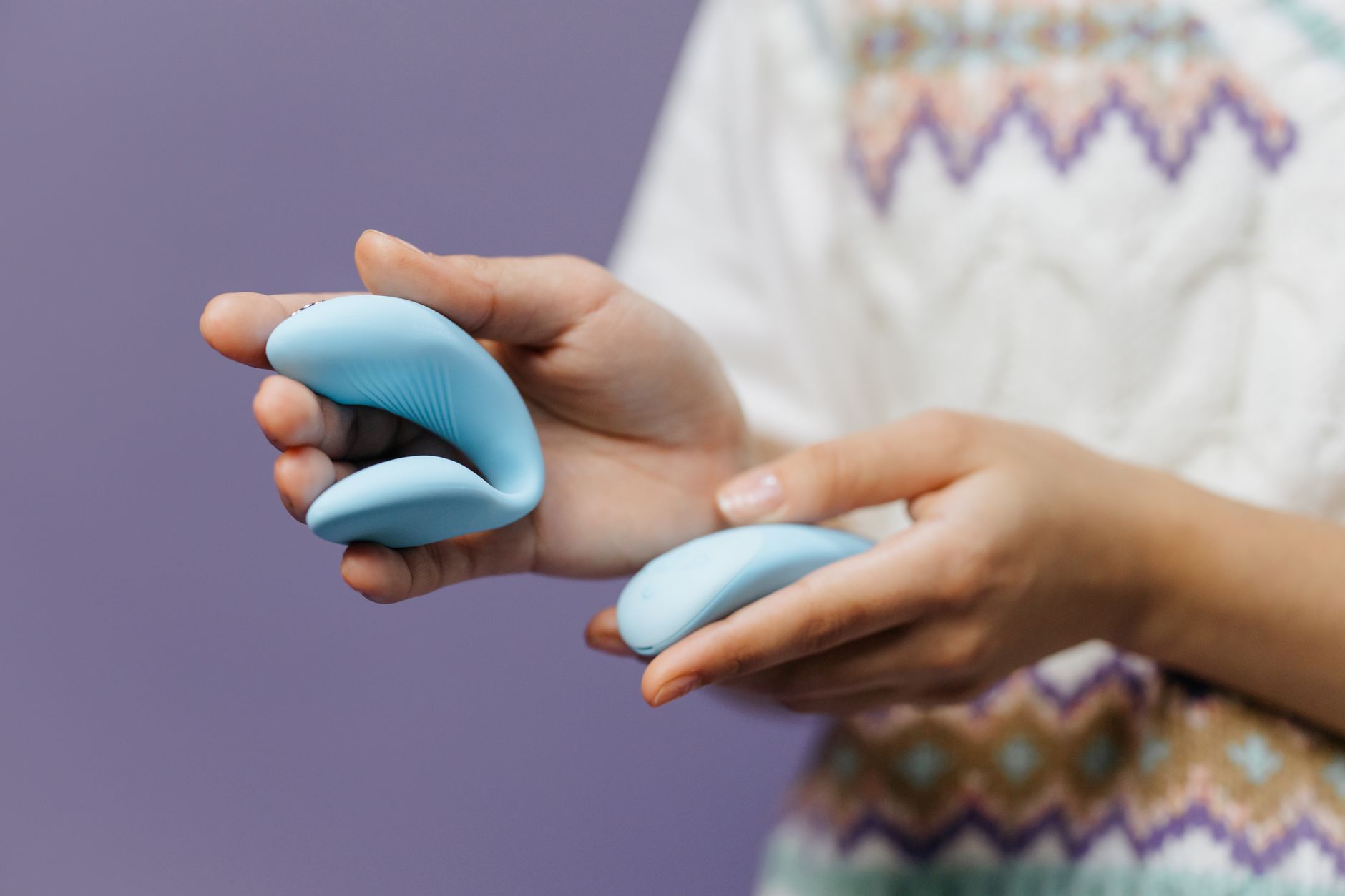
A tool like the Lem does something specific that fingers or even penetration can't always do. It reliably triggers the same neural pathway every time. When your solo pleasure feels strong and your partnered pleasure feels muted, that consistency matters because it reminds your body what sensation actually feels like.
Here's how to use that: solo sessions with your lemon vibrator become a kind of nervous system recalibration. You're not training yourself to come faster or harder. You're reminding your body that pleasure is safe, predictable, and yours.
Then, gradually, you introduce your partner into that space. Not by having them operate the vibrator or trying to replace what you do alone. By letting them be present while you use it. Watching, touching you elsewhere, being in the room with you while you reconnect with your own pleasure.
That's the bridge. It's not about the vibrator. It's about separating the context of "alone" from the context of "with them."
Starting with solo use when pleasure feels split
Set aside 20-30 minutes where you're genuinely alone and unhurried. Not sex with yourself. Just you and the sensation. Use your lemon vibrator at lower intensities first. Patterns 1 or 2 on the Lem, not maximum. The point is to feel what happens when pleasure isn't a goal.
Pay attention to the difference between sensation and performance. Sensation is what you actually feel. Performance is the story you're telling yourself about whether it's working. Notice when you slip into performance mode and gently bring your attention back to raw sensation.
Do this a few times before you involve your partner. You're not building to orgasm necessarily. You're building a stronger communication between your body and your nervous system.
Inviting your partner into the experience
This is where most couples freeze. They think introducing a vibrator into partnered sex means replacing their touch or changing how they have sex. It doesn't.
Start by telling your partner what you're working on. Not in a vulnerable, pleading way. Matter of fact: "I've noticed pleasure feels different when we're together than when I'm alone. I want to experiment with using my lemon vibrator while we're together to see if that changes things." Give them a concrete role. They could touch you elsewhere, kiss you, hold you, be inside you while you use it externally. Or they could just be present.
The first time, don't expect the same intensity or ease you get alone. You're training your nervous system to relax into arousal in a new context. That takes a few sessions.
When disconnection signals a deeper relationship issue
Sometimes physical disconnection reflects emotional disconnection. If you're using a lemon vibrator and nothing feels good, even alone, that might mean something else needs attention first.
Ask yourself: Do I feel safe with this partner? Do I feel seen? Is there resentment I haven't addressed? These aren't bedroom problems. They're relationship problems that show up in the bedroom.
If that's the case, the vibrator isn't the tool you need right now. Conversation is. Or couples counseling. Fix the trust and presence first. The pleasure usually follows.
Building pleasure vocabulary together
One thing that helps couples who are trying to reconnect through sensation is slowing everything down. Not in a sensual-music, scented-candle way. In a "let's actually pay attention to what we're feeling" way.
Your partner can ask you questions while you're using your lemon vibrator. What does this feel like? Where do you feel it most? Is it different when I touch you here? What would feel better right now? You're teaching them your pleasure landscape. They're learning it from you instead of guessing.
That information becomes the map for partnered sex. Now they know the rhythm, the pressure, the spots that register most. Your lemon vibrator becomes the starting point, not the endpoint.
Making it a regular part of your intimacy
Once you've done this a few times, it doesn't always have to be planned. A lemon clitoral vibrator can be part of foreplay, part of solo time together in the same bed, a way to take pressure off penetrative sex if that's not working for you that day.
The couples I work with who get the most out of this aren't using it as a workaround. They're using it as another language for communicating pleasure and desire. Sometimes they need that language more than they need penetrative sex. Sometimes the vibrator is the appetizer that makes everything else easier.
When to involve professional support
If you've tried this approach for a couple of months and pleasure still feels disconnected, or if there's conflict around using toys, that's worth bringing to a couples therapist. Sexual disconnection often sits on top of other relationship stress. A professional can help you untangle what's physical and what's relational.
The goal isn't to force yourself to feel pleasure in a particular way. It's to rebuild the signal between your nervous system and your partner so that being together doesn't feel like you have to shut down your own arousal to make space for theirs.
A lemon vibrator, a little patience, and honest conversation can get you there.
Frequently asked questions
Can using a vibrator alone make partnered sex feel harder by comparison?
No. If anything, it usually makes it easier because you know what pleasure actually feels like in your body. The risk isn't that the vibrator is too good. It's that you stop trying to build pleasure in other contexts because the vibrator is easier. That's why bringing your partner into the experience matters. You're not abandoning one for the other. You're teaching your nervous system that pleasure can happen in both situations.
My partner feels threatened by my lemon vibrator. What do I do?
That's usually about insecurity, not about the toy. Have a conversation outside the bedroom where you're calm and not initiating sex. "I use this because my body responds to it differently sometimes, not because you're not enough." Invite them to understand it as information, not competition. Some partners need to see it in action to realize it's not a replacement. Others need reassurance that your attraction to them hasn't changed. Start with conversation before you start with the toy.
How long does it take to reconnect pleasure with my partner using a vibrator?
It varies. Some couples notice a shift in 3-4 sessions. Others take weeks. It depends on how disconnected you've become and whether there's underlying relationship stress. If you're doing this 1-2 times a week consistently, you should notice something shifting within a month.
Should we use a lemon vibrator during all of our sex now?
Not necessarily. Think of it as a tool you have available, not a requirement. Some nights you'll use it. Other nights you won't need it. The goal is to have pleasure feel accessible both ways, with and without the vibrator. If you start relying on it every time, you haven't actually fixed the disconnect. You've just introduced a new dependency.
What if using a vibrator together makes me feel exposed or embarrassed?
That's normal. You're being physically vulnerable in a new way. Start slowly. You don't have to have an orgasm the first time. You just have to be present. Wear something that makes you feel less exposed if that helps. Tell your partner you might need to slow down or pause. Give yourself permission to feel awkward. Couples who get past the awkwardness usually report that it deepens their entire intimate life, not just sex.
Is there a specific technique for using a lemon vibrator with a partner to rebuild connection?
Start at a low intensity and focus on sensation, not outcome. You're not trying to come faster or harder. You're trying to feel present. Your partner's job is to pay attention to what's happening in your body, not to perform or to worry about their own arousal. Once you're comfortable, they can participate by touching you elsewhere, changing positions, or asking what you need. The technique is less important than the communication.
The bigger picture
When pleasure feels disconnected from your relationship, it's usually because one part of your nervous system learned that partnership requires you to be alert, perform, or override your own signals. Using a lemon vibrator alone reminds your body what genuine sensation feels like. Bringing your partner into that space, gradually and with clear communication, teaches your nervous system that you can relax into arousal even when they're present.
This isn't about the toy. It's about rebuilding the signal between your body and your relationship. Start slowly, be honest about what you're trying to do, and give yourself time. Most couples who do this work find that pleasure starts to feel less like a separate experience and more like something you can actually share.